Bhubaneswar, Nov 9 (UDN): The aftermath of Diwali celebrations has left several parts of Odisha struggling with deteriorating air quality, with firecracker emissions pushing pollution levels into the ‘Poor’ category in major locations. Bhubaneswar woke up to a thick layer of haze on Monday morning, raising concerns over public health and the growing impact of post-festival pollution.
Representational Image
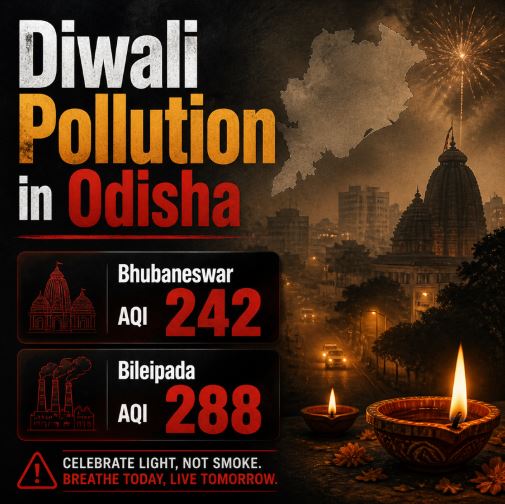
According to the reported air quality readings, Keonjhar’s Bileipada recorded the state’s highest Air Quality Index (AQI) at 288, followed by Talcher at 266 and Bhubaneswar at 207. All three locations fell under the ‘Poor’ air quality category.
The situation in the state capital remained particularly concerning. The monitoring station near Lingaraj Temple recorded an AQI of 242 on Monday morning, while Patia registered elevated pollution levels. PM10 concentrations in the Lingaraj area reportedly touched 500 during the previous night, indicating a significant deterioration in air quality.
Meanwhile, Cuttack, Baripada, Balasore and Barbil continued to experience ‘Moderate’ air quality conditions.
Firecracker Smoke Leaves Bhubaneswar Residents Worried
Several neighbourhoods in Bhubaneswar remained enveloped in smoke following extensive firecracker use during Diwali celebrations on Sunday night. Despite restrictions and awareness campaigns, firecrackers were reportedly burst late into the night, contributing to a visible deterioration in air quality.
Residents described hazy surroundings and reduced visibility, with smoke reportedly entering homes even when doors and windows were kept shut. Several people also complained of breathing discomfort, while families expressed concerns about the possible health consequences of prolonged exposure to polluted air.
The situation has once again highlighted the environmental cost of excessive firecracker use, particularly in densely populated urban areas.
Rising Pollution Raises Health Concerns
The post-Diwali pollution spike has renewed concerns about the health risks associated with exposure to particulate matter and other pollutants released by firecrackers.
Poor air quality can aggravate respiratory problems, trigger coughing and throat irritation, and worsen existing conditions such as asthma and other lung diseases. Children, elderly people and individuals with respiratory or cardiac conditions are particularly vulnerable.
An AQI reading below 50 is classified as ‘Good’, while readings above 200 fall under the ‘Poor’ category under India's National Air Quality Index classification.
Enforcement Measures Under Scrutiny
Despite awareness drives and restrictions imposed by the Bhubaneswar Municipal Corporation (BMC), the Odisha State Pollution Control Board and other concerned departments, the reported pollution levels suggest that controlling firecracker-related emissions remains a significant challenge.
The sharp rise in pollution following the celebrations has raised questions about the effectiveness of existing enforcement measures and the need for stricter monitoring of firecracker use.
With several locations recording elevated pollution levels, residents are being urged to remain cautious, particularly during periods of heavy haze. Limiting outdoor physical activity, avoiding unnecessary exposure to smoke and taking extra precautions for vulnerable family members can help reduce the immediate health risks.
The latest readings serve as a reminder that the environmental impact of festive celebrations can extend well beyond the night of Diwali, leaving cities grappling with polluted air even after the festivities have ended.