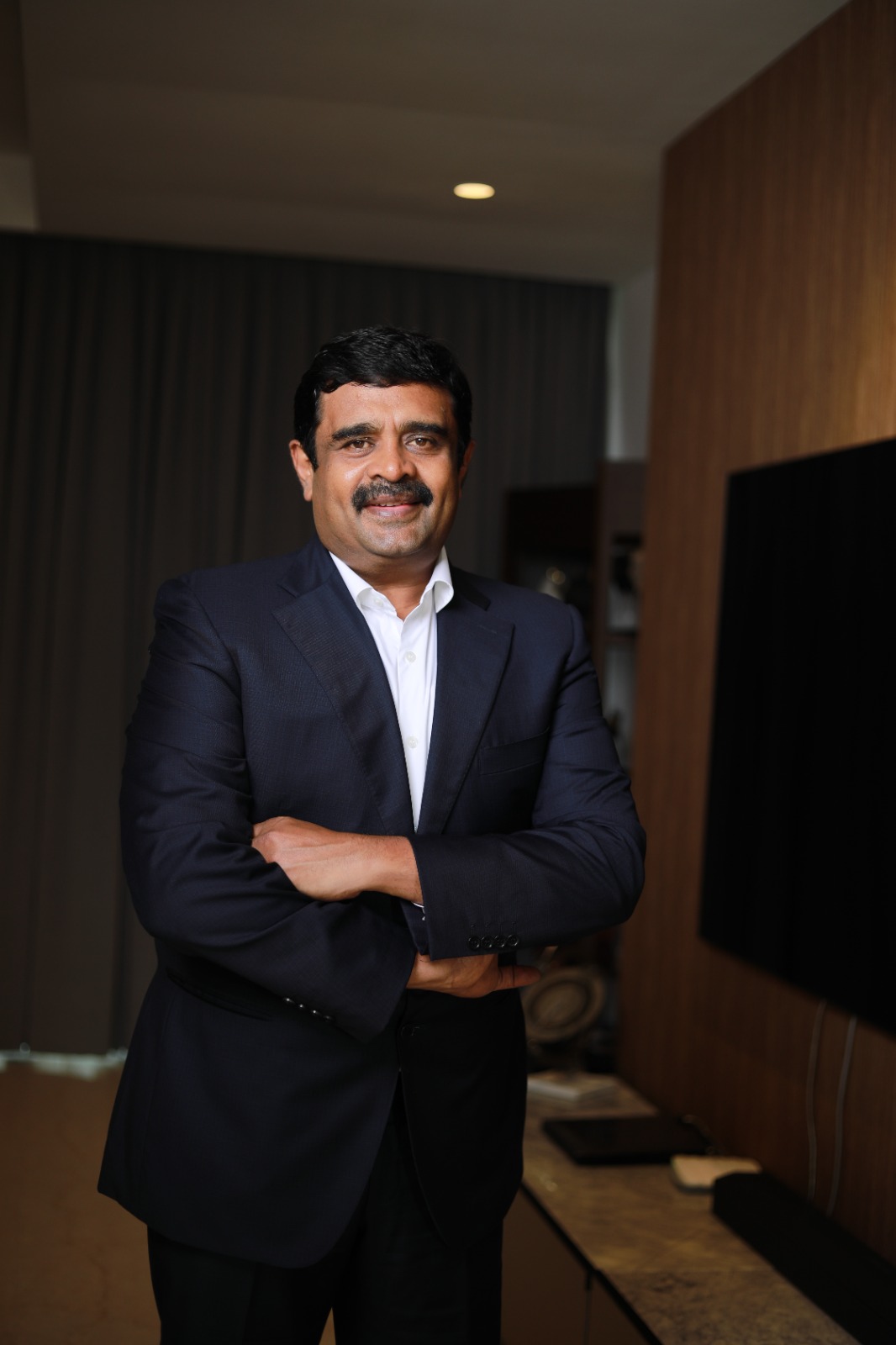
By:- Mr. B. Prabhakaran, Managing Director, Lloyds Metals and Energy Ltd
As industrial activity gathers pace in Gadchiroli, Lloyds Metals and Energy Ltd. is putting increasing emphasis on the workforce needed to support that growth, linking local employment with technical training, education and longer-term career development.
The company’s latest data for the region places its workforce at more than 17,500 people, including over 3,000 women. Alongside this, more than 1,000 people have been trained through the Lloyds Mission for Global Skills and Entrepreneurship across over 30 trades, with the company reporting 100% placement for those trained. Around 400 of the trainees are women.
The approach reflects a broader challenge facing industrial regions: plants and mines can be built faster than skilled workforces can be developed. As Lloyds expands mining, processing and steelmaking capacity in Gadchiroli, the requirement is shifting from creating jobs alone to building people who can operate increasingly technical and integrated industrial systems.
Training spans practical roles linked to industry, including mechanical, electrical, driving and other technical trades. Lloyds has also sought to connect training more directly with deployment. In a November 2025 disclosure, the company said LT Gondwana Skill Hub Pvt. Ltd., in which it proposed acquiring up to a 20% stake, was already deploying more than 1,200 skilled personnel across project sites in Gadchiroli, with a focus on manpower training and technically qualified industrial assignments.
Education forms another part of that workforce pipeline. Lloyds’ latest figures show 2,500 students enrolled, of whom more than 2,100 are residential students, with girls accounting for 45.7% of enrolment. The company has also supported technical education through the University Institute of Technology in Gadchiroli, intended to create pathways into disciplines such as mining, metallurgy, manufacturing and computer science.
A smaller group of students has been given international exposure. More than 30 tribal students from Gadchiroli have been fully sponsored for higher education at Curtin University in Australia, according to the latest programme data shared by the company.
One of them, Ignasiyus Prakash Bada from Bande village near the Surjagarh iron ore mine, recently returned after completing a Master’s in Innovation and Entrepreneurship at Curtin University and joined Lloyds Metals as a management trainee. His journey has become a practical example of what the company is trying to build: local talent gaining wider exposure and then returning with skills that can be applied in the region.
The workforce strategy also extends to participation by women in roles traditionally associated with male-dominated industrial operations. Lloyds’ FY2024-25 annual report said more than 250 women had been trained in excavator driving, light and heavy motor vehicle driving and other core mining roles, while 271 local women were employed in core mining operations at Surjagarh and Hedri at the time.
The company’s current expansion in Gadchiroli makes this workforce development increasingly relevant. Lloyds is moving beyond iron ore mining into beneficiation, pelletisation and downstream steelmaking, creating demand for a wider range of technical and operational skills. Its own corporate material describes local employment, education and skill development as part of the infrastructure required to support that industrial growth.
For Gadchiroli, the shift is therefore gradually moving from employment generated by industrial activity to capability built around it.
The longer-term test will be whether the region develops enough engineers, operators, technicians and managers from within its own communities to support the scale of industry now being planned. Lloyds’ current investments in training and education suggest that workforce development is being treated as part of that industrial build-out, rather than as a separate social programme.